Meet the Messenger: Dr. Gail F. Baker, Former SVP & Provost, University of San Diego
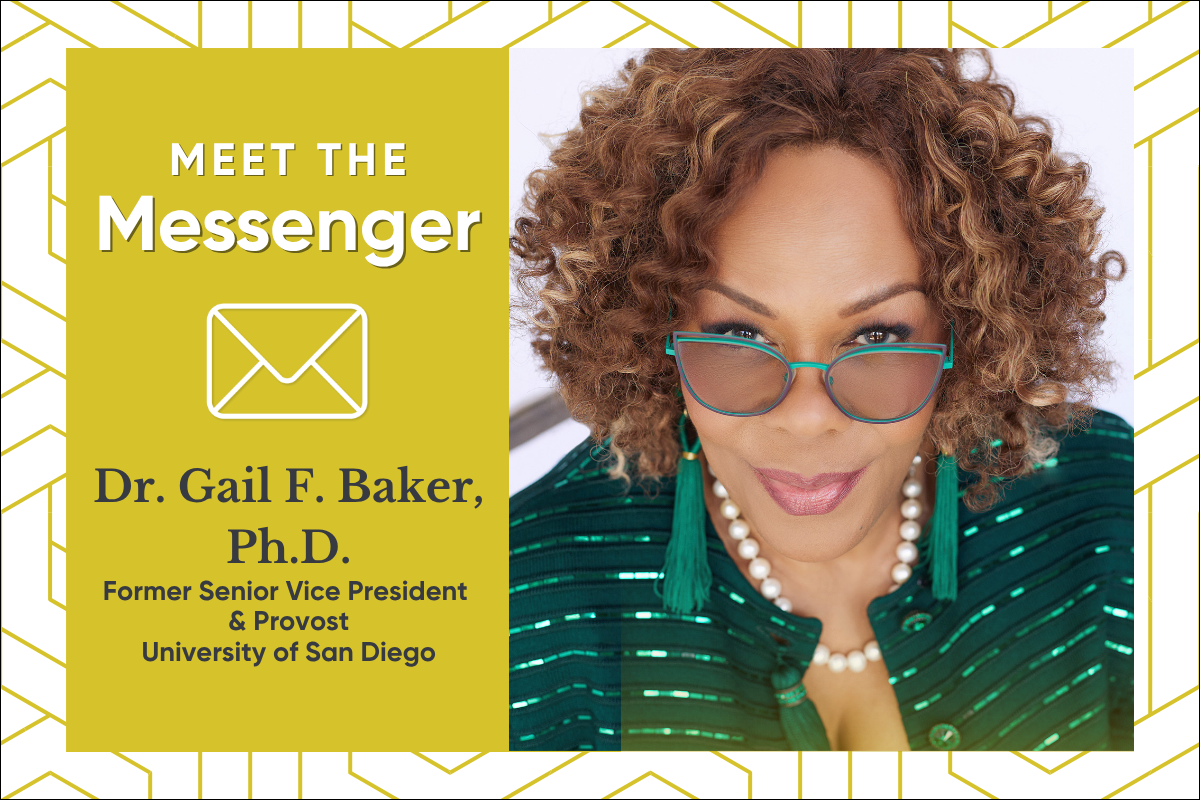
Meet the Messenger spotlights leaders across industries who understand that strategic communication is central to individual and organizational success. Each conversation shares hard-earned lessons, candid reflections, and insights on how thoughtful, strategic communication drives impact.
We’re excited to feature Dr. Gail F. Baker, Ph.D., former senior vice president and provost at the University of San Diego. A respected communications leader, educator, and scholar, Dr. Baker has built a career that spans higher education leadership, journalism, public relations, and academia. During her time at USD, she served as the university’s chief academic officer, working closely with academic leadership to guide strategy and institutional priorities. Before joining USD in 2017, she was the founding dean of the College of Communication, Fine Arts and Media at the University of Nebraska at Omaha and held additional leadership roles at universities across the country.
Dr. Baker’s career reflects a deep commitment to communication, leadership, and storytelling. Before transitioning into higher education administration, she worked in journalism and corporate communications, including positions with IBM and International Harvester, and as a reporter and editor for the Chicago Daily Defender Newspaper. An accomplished author and educator, she has written books, articles, and book chapters and has earned recognition for both her teaching and documentary writing, including multiple Emmy Awards for Excellence in Documentary Writing and Producing. She shared with us her experiences that shaped her leadership style, the evolving role of communication in higher education, and the lessons she’s carried across journalism, academia, and executive leadership.
What’s one pivotal moment that most shaped the communicator you are today?
I started taking photos all over my Chicago neighborhood when I was about 10 years old. My parents gifted me with a movie camera and tape recorder before I was a teenager. With this equipment, I created news stories featuring my dolls. (They had very curious and rarely examined lives). My sisters were kind enough to let me interview them about topics I found interesting or ones I just made up. Later, I wrote reviews for movies that didn’t exist and I covered make believe events. My Godsister, BA (a creative visionary), also had a movie camera, and we spent hours on the phone talking about the films we would produce. To this day, we continue to work together on documentaries.
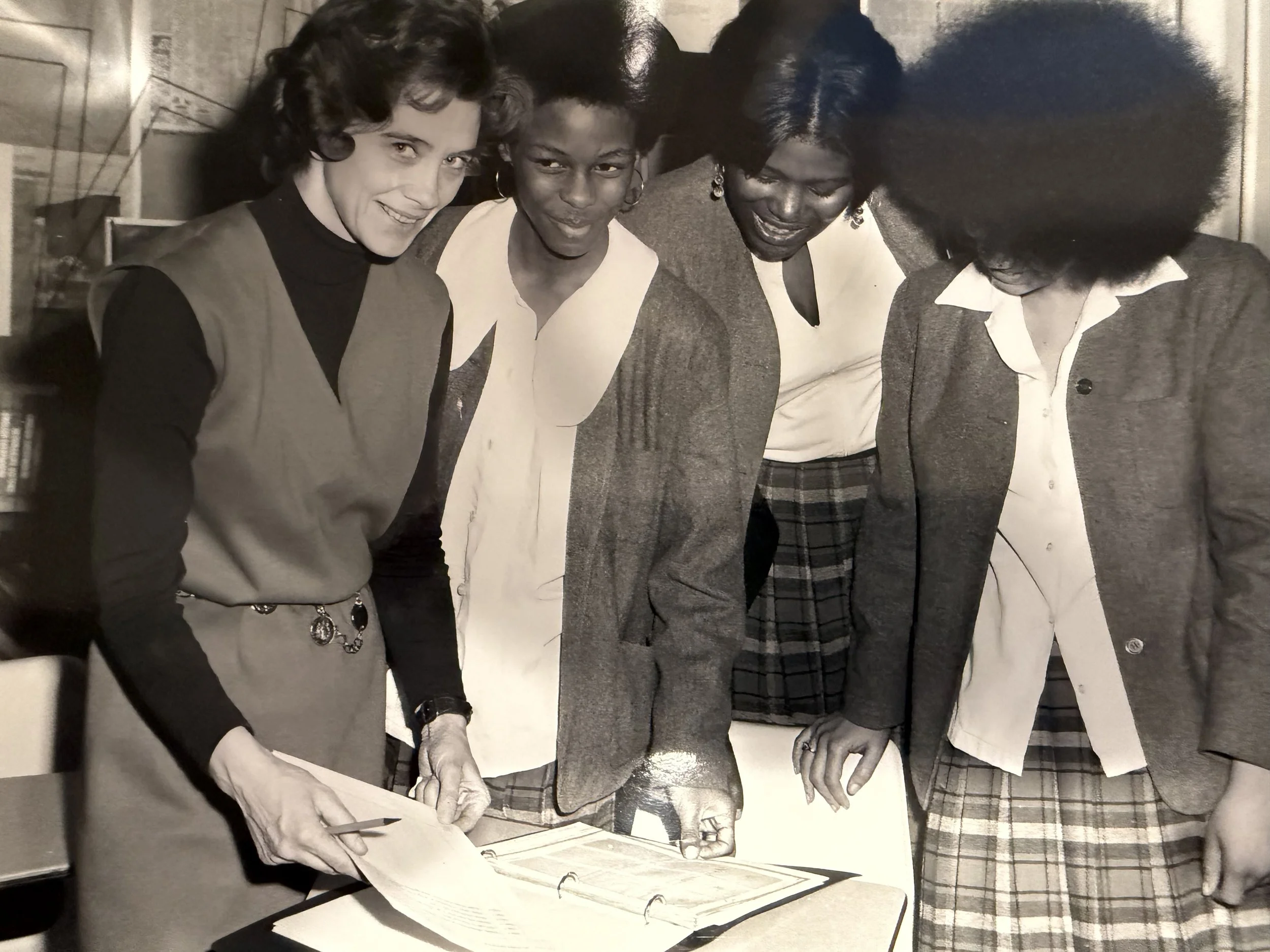
By the time I reached high school, I was hooked on storytelling. As a freshman, I admired the editor of the yearbook (a post only held by a senior). I would go on to gain that role, giving me control over how our stories were framed and presented. I also produced the school’s first multimedia presentation covering our high school picnic.
Describe one project or situation where you were absolutely at your best. What made it work so well?
It’s more like a series of moments that could only be appreciated in retrospect.
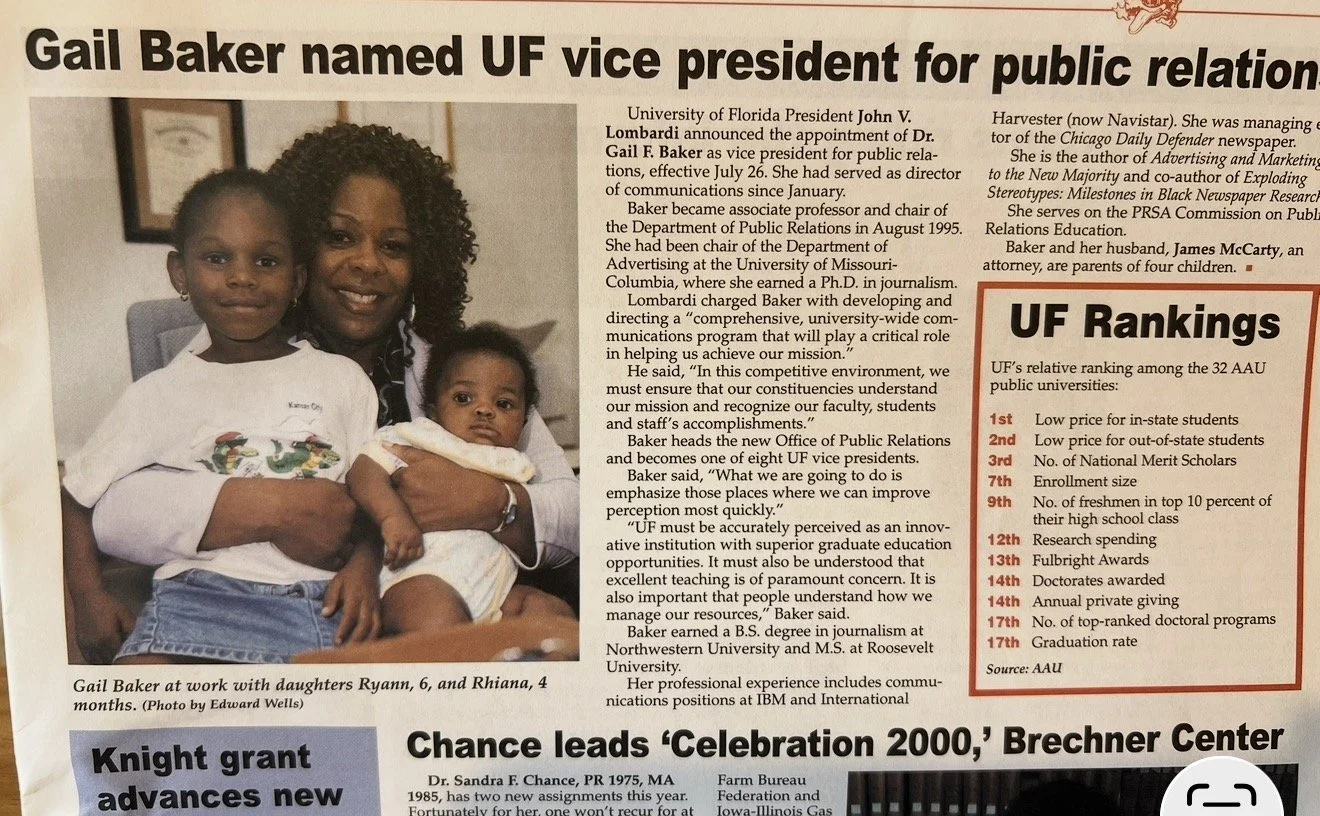
As the first vice president for public relations at the University of Florida, I was called upon to use a complex set of skills under intense scrutiny. There was no blueprint for managing the task. The president who named me to the position left a few months later; a new statewide governance structure was implemented; a number of key positions were unfilled. At the same time, higher education was rapidly changing. The university had 17 colleges vying for resources and attention. External forces were converging on academia, including local politics and financial pressure. Students’ expectations were shifting. Athletics were expansive and highly visible. Crises just kept coming.
Against this backdrop, my assignment was to enhance the university’s academic reputation. Our strong and resilient team set out on that very mission. I am proud of what we were able to accomplish.
What’s a mistake you made that turned into one of your best professional assets?
When I worked as a communications specialist for a major corporation in Chicago, I publicly released some sensitive information which interrupted stock trading. There was also the possibility of federal fines. Once I realized what I had done, I grabbed my personal items and just walked out of the office. How could I ever recover from this horrible mistake? Eventually, I returned expecting to be fired.
My manager called me in and told me there were fail-safe protocols for such an occasion and that I did not bankrupt the company. He had corrected the problem with a few well-placed phone calls.
The lesson learned was to communicate during a crisis instead of running away from the situation. I suffered unnecessarily for hours. I also learned the value of crisis planning. I would never take on another assignment without one.
If you could change one thing about our field in the next ten years, what would it be and why?
The next 10 years will be fraught with challenges. I urge messengers to return to our founding mission—identifying and sharing the truth. In a world replete with miscommunication, messengers might be the only way back to honesty, and dare I say, clarity.
Do you have a guiding principle that helps you excel at work?
I don’t have to know it all. I don’t have to do it all. I don’t have to be it all.