Bauer’s Brand Protection Backfire
Brands make mistakes. And, unfortunately, in the era of TikTok, those mistakes get amplified.
Sometimes that amplification is a gift. It forces a brand to take accountability and refine its processes. Other times, it becomes a case study in what not to do.
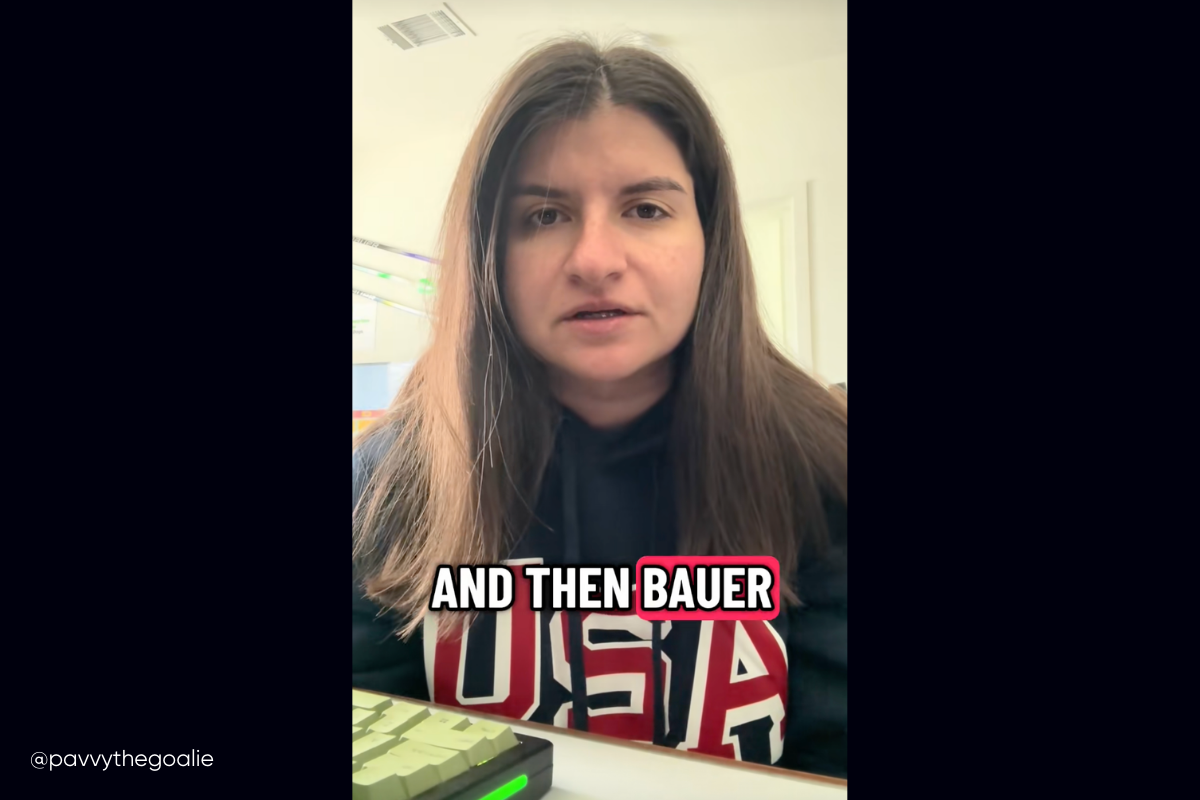
Recently, TikTok user @pavvythegoalie, a small creator who posts hockey gear reviews, shared a largely positive video reviewing hockey gear brand Bauer’s newest catalog. She has posted several complimentary videos about the brand before. She wasn’t a mega-influencer. She wasn’t angling for sponsorships. She just likes hockey gear.
So when the Bauer social media team reached out asking for her email to discuss a possible collaboration, she was understandably excited.
But when the highly anticipated email came through, she was instead rocked. Instead of a collaboration invitation, she received a cease-and-desist letter demanding she take down the video.
She complied. Then she posted a follow-up explaining what had happened.
The backlash was immediate. Comment sections filled. Other creators stitched the video. Some declared they would no longer support Bauer. And the controversy extended beyond the hockey circle into the mainstream.
To add to the mess, Bauer later reposted one of Pavvy’s follow-up videos, apparently without fully watching it. She had created the video to show all the Bauer gear she already owned. Then, at the end, declared she’d no longer support the brand. The repost was eventually removed by Bauer after being flagged by followers.
Competing hockey brands seized the moment and sent her gear, receiving positive attention at Bauer’s expense.
Eventually, Bauer issued a short public statement and sent her a direct apology.
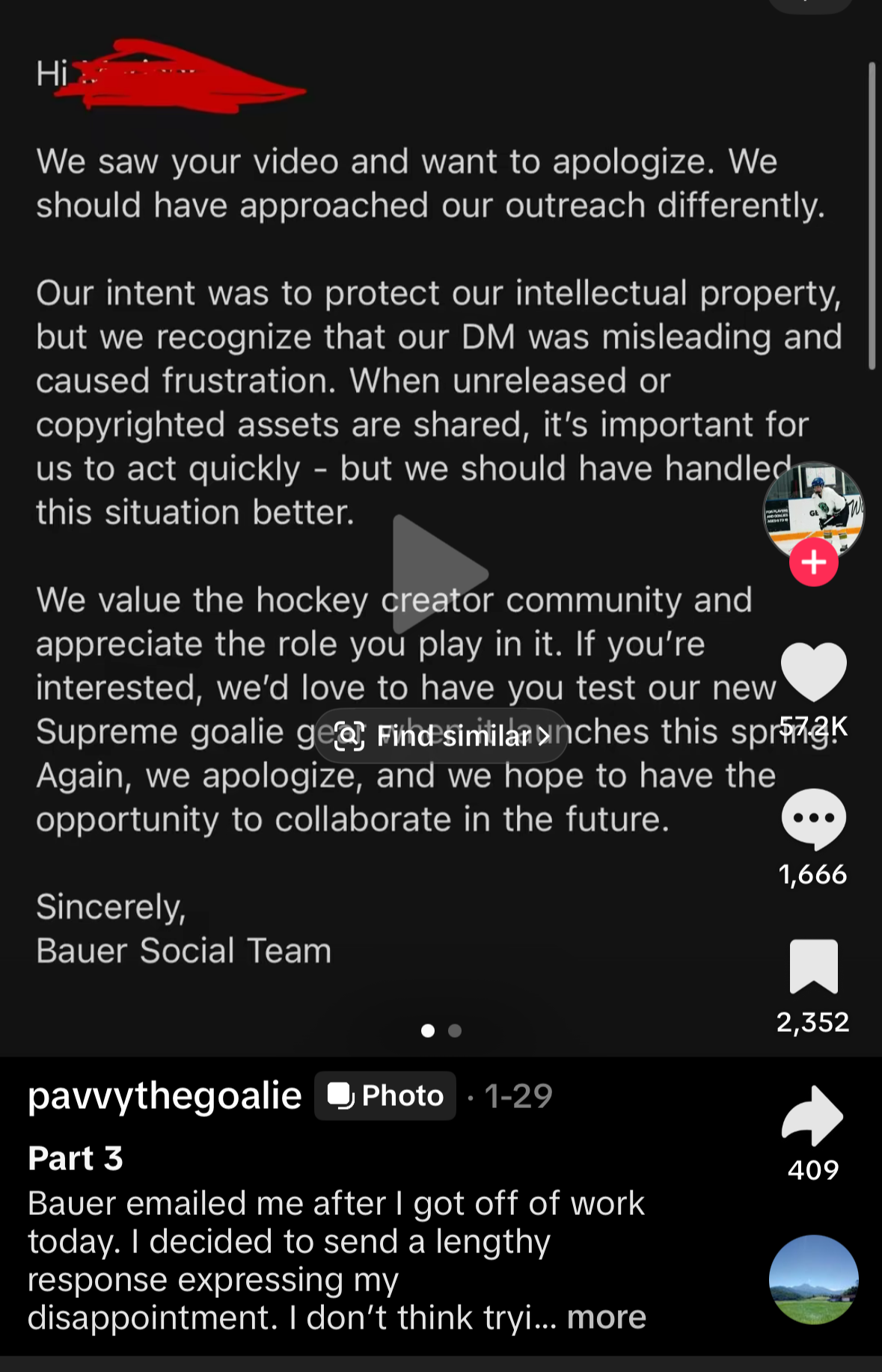
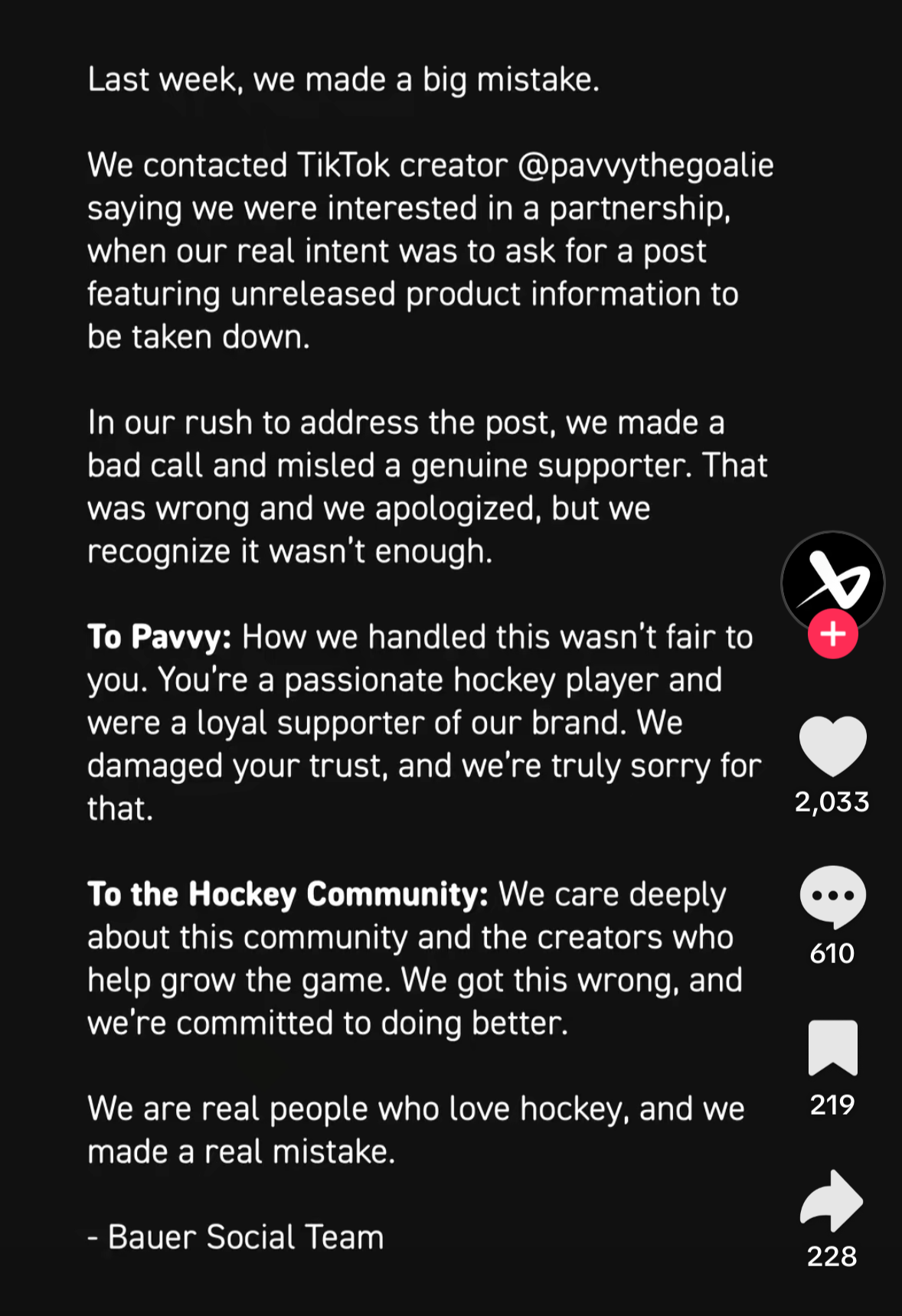
By that point, the damage was done.
Where It Went Wrong
There are many, many lessons on what went wrong in this scenario.
1. The bait and switch.
Hinting at collaboration, then responding with a legal threat, is jarring. Especially to a loyal fan. That emotional whiplash and lack of transparency is what fueled much of the outrage.
2. Escalation as a first move.
Yes, brands must protect intellectual property. But immediately jumping to legal language with someone who is clearly well-meaning, not profiting, and who makes content regularly, is rarely wise. If you know they have an audience, assume the interaction may become public.
3. The timing.
Women’s hockey may not dominate headlines year-round, but during Olympic cycles it reaches new audiences. Increased visibility means increased scrutiny. This wasn’t ideal timing for a self-inflicted controversy.
4. The sloppiness.
Reposting content without fully watching it is inexcusable. Full stop. If you manage a brand account, you are responsible for understanding the entirety of what you amplify.
5. The public apology.
It was brief. It didn’t explain what would change. It read like it was written to quiet backlash, not to repair trust.
6. The direct apology.
Offering gear is nice. Signing it from the “Bauer Social Team” creates distance from accountability. People want to hear from decision-makers when something goes wrong.
Creators who organically review and promote your product (and positively!) are doing marketing work for free. That’s not a threat. For most marketers, it’s the dream.
How We Would Have Handled It
First, we would have assessed whether this was truly worth pursuing. The review was positive. The creator was loyal. The audience was small. Sometimes the smartest move is no move at all.
If removal was truly necessary due to intellectual property concerns, the message could have looked something like this:
“Hey! Love your review content. Thank you so much for being a supporter of Bauer! We’re not sure how that catalog started circulating, but it’s not supposed to be available for the public just yet. Would you be willing to take down your post until (DATE OF RELEASE)? As a thank you for your review and for your help, we’d love to send you some gear. We need more women talking about hockey to grow the sport, and your voice is important! What do you think? If agreeable, send us your email!”
Kind. Transparent. Clear.
And then follow through.
If she refused? Then you escalate. But escalation should rarely be your opening move.
The Bigger Lesson
People punishing people who make their jobs so much easier confuses us.
Protecting your brand matters. But so do relationships. A little bit of kindness (and maybe a little bit of free product) would have saved Bauer a wave of backlash and turned a loyal fan into an even bigger advocate.
This was an unforced error for Bauer and one that has cost them.