Face the Facts (Sheet)
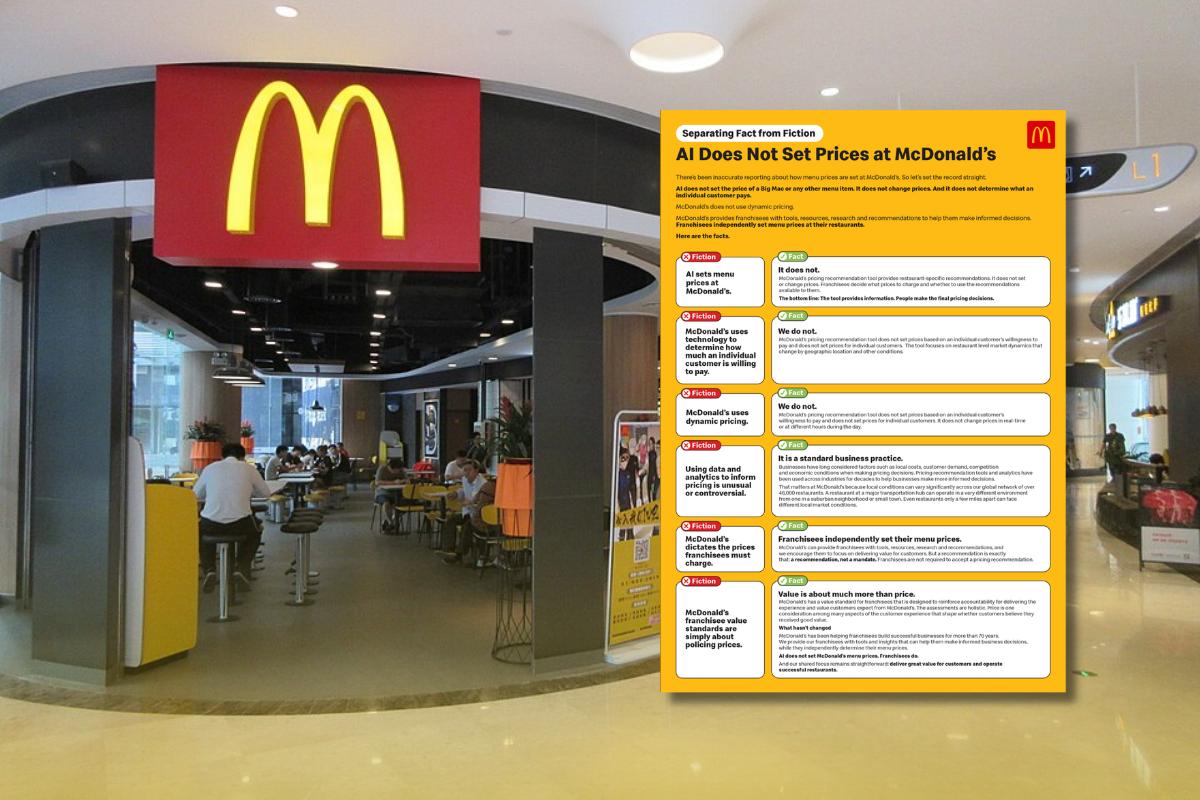
The McDonald’s and Walmart PR teams are having difficult weeks. Axios Communicators covered the story well, so we won’t get into all the details here. The gist: Both companies have faced accusations of using AI-powered dynamic pricing to charge different customers different prices based on what the technology believes they’re willing to pay, maximizing profits in the process.
As you might imagine, the idea that I could pay one price for a hamburger while you pay another for the exact same burger hasn’t sat well with consumers.
Both companies have had to respond to the backlash. We want to call attention to one component of McDonald’s response: its fact sheet. Whether you agree with the company’s argument or not, from a communicator’s perspective, it’s a well-written piece.
One of the most underrated tools in a communicator’s toolbox is the humble fact sheet. Conceptually, it’s not the most exciting thing you’ll produce. But it’s incredibly versatile. It’s a steady hand in a crisis, an educational tool for explaining complex concepts, a shared script your entire organization can use, and a gold mine for content.
(As a side note, we’re using fact sheet and FAQ somewhat interchangeably here. Versatility! Whether you’re presenting facts or framing them as questions and answers, the principle is the same.)
Let’s take a closer look at McDonald’s fact sheet.
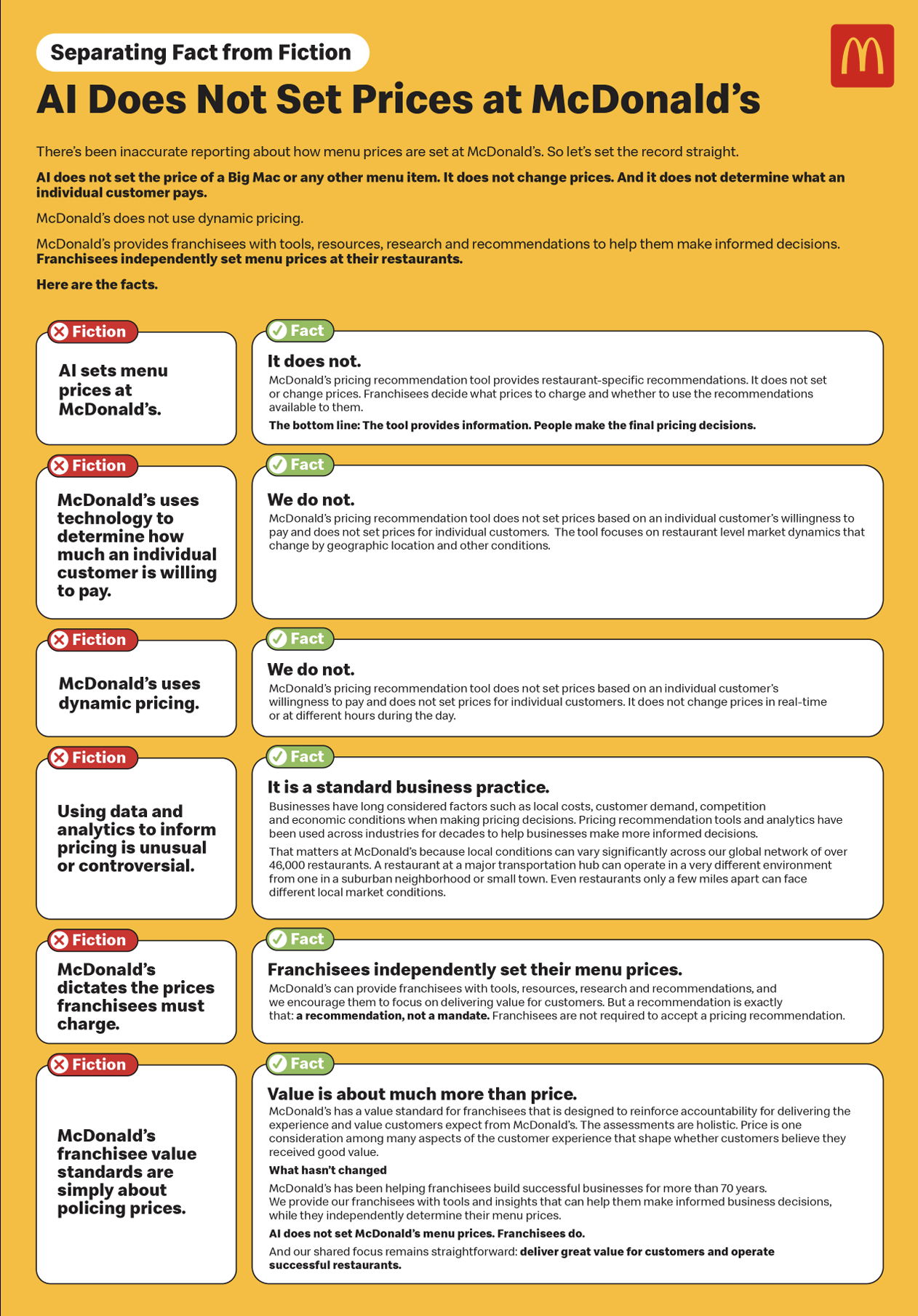
It addresses the arguments head-on.
The company takes the consumer concerns one by one and responds to each. The approach acknowledges the arguments being made and offers a specific answer to each one, rather than relying on a broad, blanket statement.
It’s concise.
One of the most difficult communications skills is distilling a message to its simplest form without leaving out essential information. McDonald’s fits its key points on one page, addressing each argument in just a handful of sentences.
That doesn’t mean you should focus all your efforts into just one page, though. Use the space you need to lay out your argument – just be mindful not to over-do it.
It’s easy to follow.
The information is organized in a straightforward format: fact, fiction, and a concise explanation. Readers can quickly identify the claim being addressed and understand the company’s response.
In our view, a fact sheet or FAQ is essential during a crisis. But these tools aren’t reserved for crisis communications. They can help explain your organization’s work to a reporter, break down a complex policy solution or research topic for your audience, or counter misinformation, as McDonald’s is attempting to do.
They’re also useful beyond your website or as a print-out. Each question can become a social media post or serve as the starting point for more in-depth content, such as a blog post or newsletter article.
Perhaps most importantly, developing a fact sheet forces you to think through your audience’s questions, concerns and assumptions. It gives you an opportunity to organize your answers and establish consistent messaging that everyone in your organization can use.
Make sure your team has easy access to the finished product and understands how to use it. The fact sheet should serve as a foundation for responses to customers and media inquiries, as well as for other communications. The beauty of a fact sheet is that it isn’t just an external communications tool. It’s an internal resource, too.
The facts matter, and having them organized, accessible, and ready to use is a powerful asset to your communications team.