You Might Be Assuming Too Much
A little personal confession.
I have just enough social anxiety that if you ask me to walk into a new place full of people I don't know, in a building I've never been to, with processes I’m not familiar with, there's a decent chance I'm going to decide it can wait (until it can’t).
When I moved to Omaha, it took me almost two years to get a library card. Not because I didn't want one. Today, I'm probably what you'd call an Omaha Public Library power user.
But ten years ago, getting a library card meant figuring out how to drive to a new part of town, where to park, where to go once I got inside, who to ask for help, what documents I needed, what the process looked like, and fear that they were going to think I was an idiot for not knowing how to do all of this to begin with.
None of those things were difficult. But together? They created just enough mental friction that, compared to everything else I was juggling at the time, it wasn't worth tackling. I already knew how Barnes and Noble worked. Why add something new into the mix?
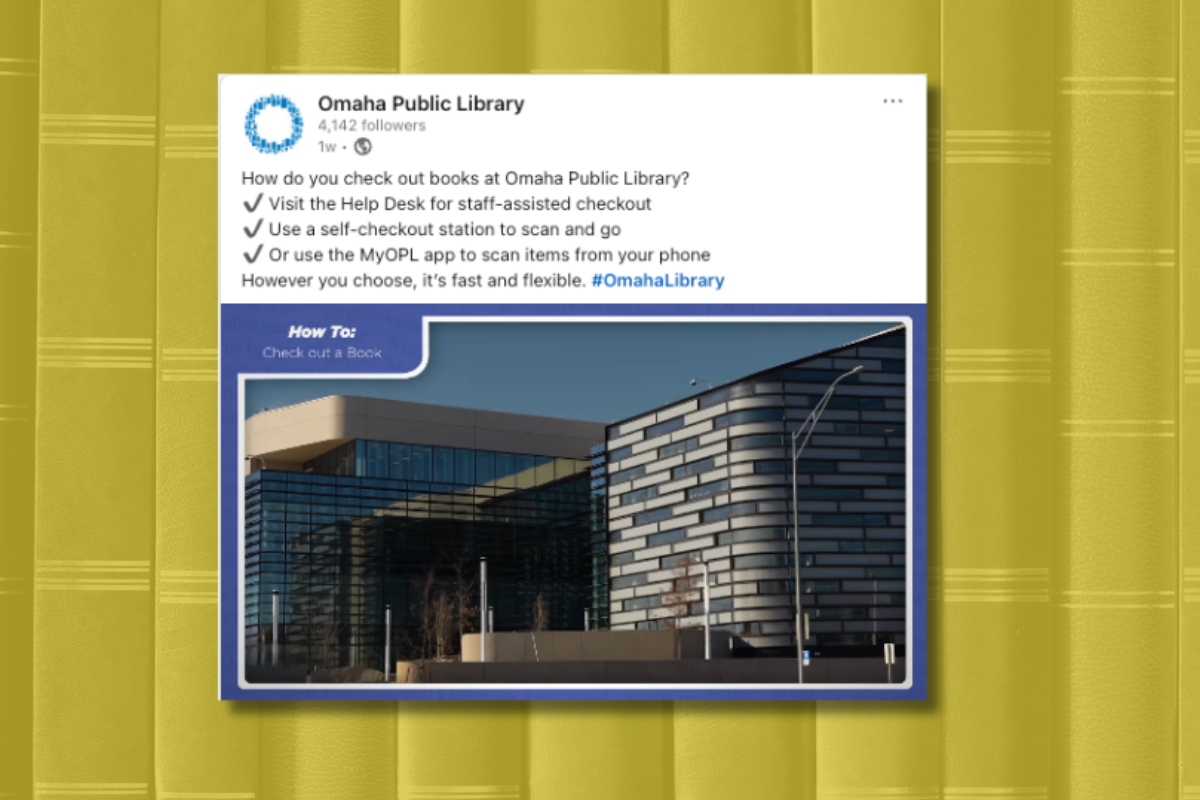
The other day, I came across a social media post from the Omaha Public Library that I absolutely loved:
It wasn't announcing a new program or promoting an event. It was simply a short video showing people how to check out a book.
That's it.
Years ago, if that video had appeared in my feed, there's a good chance I would have gotten my library card much sooner. It would have answered one small question before I ever had to ask it myself. It would have removed one tiny piece of uncertainty.
That’s what good communication does.
As communicators, we're constantly chasing what's new. We think our audience only wants the newest announcement or update, but sometimes we forget that the people we're trying to reach don't have the same baseline knowledge that we do. What’s mundane for us is new information for them. Often, it isn’t – at least for a portion of your audience.
Sometimes the thing preventing someone from engaging isn't a lack of interest. It's a lack of the most basic information and the work it would require to learn it.
So every once in a while, it's worth stepping back and asking: What would someone brand new need to know? Maybe it’s:
Your mission
How to sign up for services
Where to park
What to expect in a first interaction with your team
What you have to offer
It’s not flashy, but it reduces friction and lowers barriers to getting involved with your organization. It makes you feel more approachable. And, it could be the thing that encourages someone to take the first step to learn more.
None of this is to say that all your content needs to cater to beginners or first-time audience members. Instead, it's about recognizing that people are at different points in their journey with your organization and making sure you're occasionally creating content that meets them where they are. By doing so, you make it easier for more people to engage, regardless of whether they're discovering you for the first time or have been following your work for years. Sometimes it's simply helping them feel comfortable enough to begin.