What My Toddler Taught Me About Language
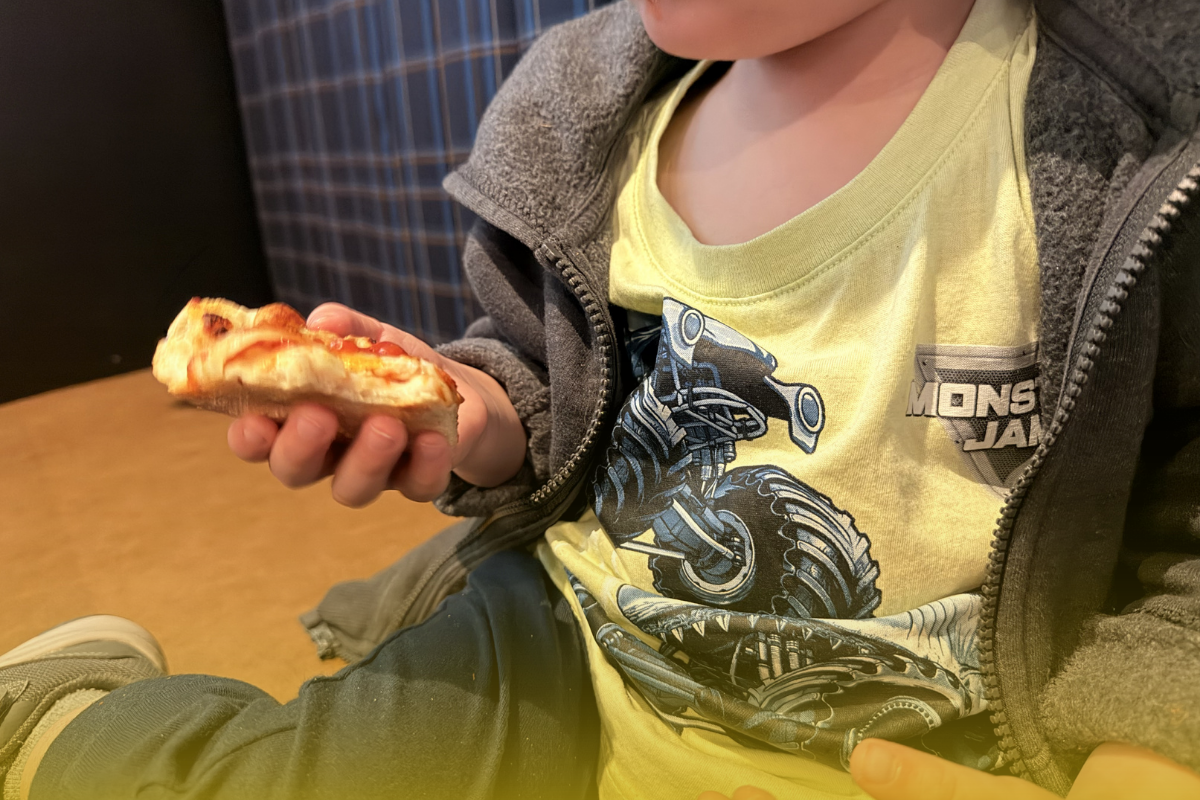
Last weekend, we took our two-year-old out to dinner. If you’re a parent, you know all too well that taking a toddler to a new restaurant is always a gamble. Will they have something he’ll eat, or are we relying on the emergency Goldfish stash in the diaper bag to get us through?
This time, we got lucky. Cheese pizza was on the menu. A guaranteed win.
The food arrived. He took one bite… and immediately rejected it. It became abundantly clear that what was in front of him was not, in fact, cheese pizza – at least not in his mind.
We quickly got to the root of the issue: this pizza didn’t match the version he had in his head from the place we go almost every weekend. It looked different. It was cut differently. The crust was puffier. To us, it was clearly cheese pizza. To him, it wasn’t even close.
So I tried something.
I’d seen parents online “rebrand” food for their kids. Broccoli becomes “little trees,” salmon becomes “pink chicken.” So I gave it a shot.
“It’s not pizza,” I said. “It’s cheesy bread.” Then we sat back to watch with bated breath.
He took a bite. And then another. And suddenly, he was happily eating the whole thing.
Nothing changed but my language.
The Lesson for Communicators
My toddler didn’t dislike the meal. My language just didn’t match his understanding.
And here’s the hard truth: he wasn’t in a place to hear a long explanation about the beauty of different styles of pizza. He was hungry. He was tired. He needed something that made immediate sense.
Communicators run into this all the time when it comes to language. We choose:
The technically correct term
The industry-standard jargon
The acronym that everyone in our organization rattles off without a thought
We forget that often our audience isn’t “in the know.” They don’t live, breathe, and digest the same information that we do.
Our job is to use language to bring them along with us – not alienate them further by making them feel dumb for not understanding or making them work harder to catch up.
Clarity Beats Correctness
There’s a difference between being right and being understood…and you must walk the line of both.
If your audience doesn’t immediately recognize what you’re saying or why it matters, they’re not going to stick around long enough to learn more. Sometimes that means you have to use terms that, even if not preferred, bring them along and invite them to jump further into your world.
Essentially, you have to be a translator and bridge the divide between your world and theirs. You have to say “cheesy bread” instead of “pizza.” Is one technically more correct than the other? Sure. But neither of them is wrong, and one of them sure worked a lot better.