Sadly, Scammers Must Also Be Good Communicators

Ugh. Your EO Report authors were absolutely inundated with scams in our inboxes, texts, and voicemails last week.
How? Unclear. But, however it happened, we're duly annoyed. Luckily, we've each sat through the University of Nebraska at Omaha's required employee cybersecurity training about a thousand times, so anyone with nefarious intentions is going to have to wake up earlier to catch us off guard.
But it got us thinking: scammers, perhaps more than anyone, have to be excellent communicators. They have to make their lies believable. After all, how else are they going to lure you into their trap without a convincing hook, voice, and call to action?
So we thought we'd share some of the messaging hooks they've sent us this week. One, in case you receive them too and know to avoid them. And two, because some of them are actually... dare we say... good? The scammers are getting cleverer, friends.
First, let’s start with one of the weaker ones.
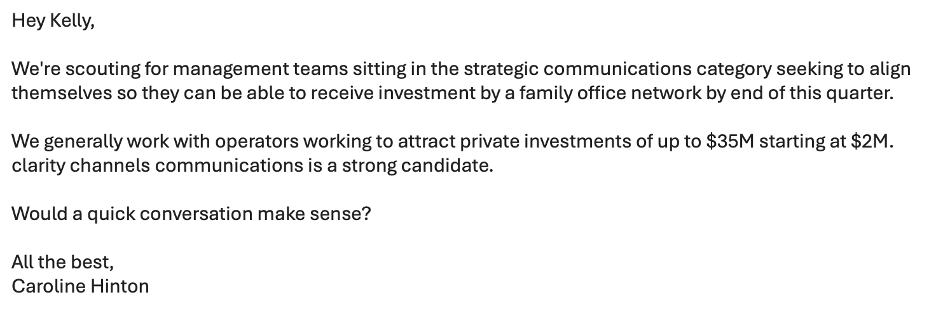
Pros: $35 million? Count us in.
Cons: Bad grammar. Bad punctuation. We’re going to have to kiss that money goodbye.
Moving up in skill, here’s another.

Pros: We DO want to scale our newsletter, so he was able to identify a customer need.
Cons: Blythe is not speaking a language his audience understands. We are PR people, not finance people. I don’t know what any of this means (or, frankly, if it means anything at all). Also, it’s a scam, so there’s that.
Alright, this is where things start getting tricky.
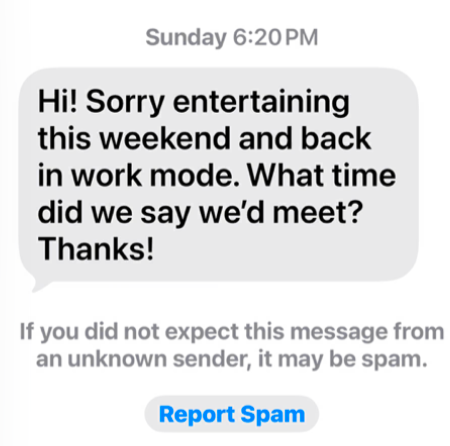
Pros: Wow! This one made us think. What a hook! It immediately creates a sense of panic. “Who did I have plans with? Why isn’t their number in my phone?” It’s even from a Nebraska number, creating a sense of “I should know who this is.”
Cons: It’s a scam.
This one made it look like they were forwarding a note from a client.
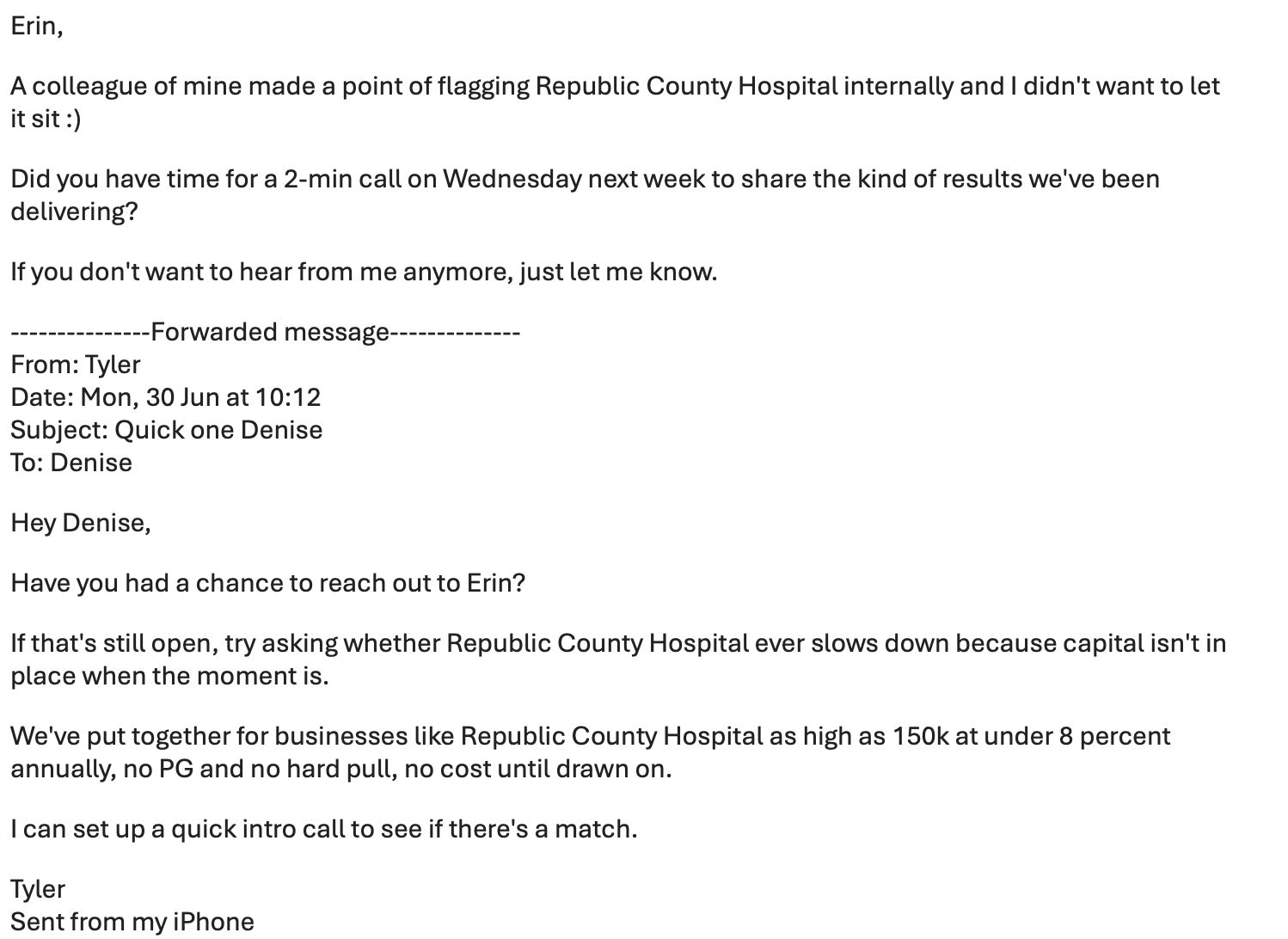
Pros: There’s personalization, and they added client credibility.
Cons: That’s not actually a real client or a forwarded note.
This one was pro-level.
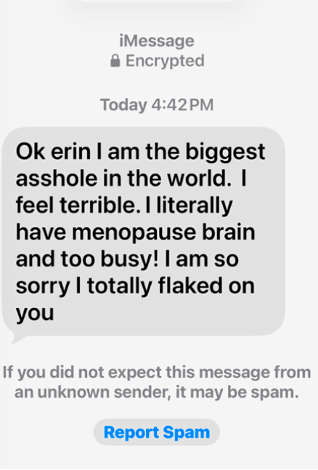
Pros: Wow, personalization AND personality! It creates panic, while also feeling relatable! The bad grammar/punctuation actually makes it even more realistic given the delivery channel is a text.
Cons: Again. It’s a scam.
Another note: Almost all of these scams were developed into complex workflows and automations. They involved follow-ups, personalization (though that part wasn’t always well-executed), and a casualness that felt human.
Before you consider responding, take 10 seconds to check.
Look at the sender's full email address, not just the display name. Fishy?
Don't open attachments or click links unless you're confident the message is legitimate.
Do not share any personal information. Is it too good to be true?
Ask yourself if the email is truly personal or if it could have been sent to thousands of people.
If someone claims a referral or connection, verify it through a trusted source. At a minimum, this gives your connection a heads up they are being spoofed.
When in doubt, contact the person or organization using a phone number or website you already know, not the contact information provided in the email. If you even have time to do this!
Be sure to also hold basic training for your staff at regular intervals. This is not just a personal nuisance – it’s an organizational risk.
A brief pause before clicking is one of the simplest and most effective cybersecurity habits you can build.
Stay vigilant out there!