From Unknown to Unstoppable: What Strategic Comms Leaders Can Learn from Curt Cignetti’s Culture Reset
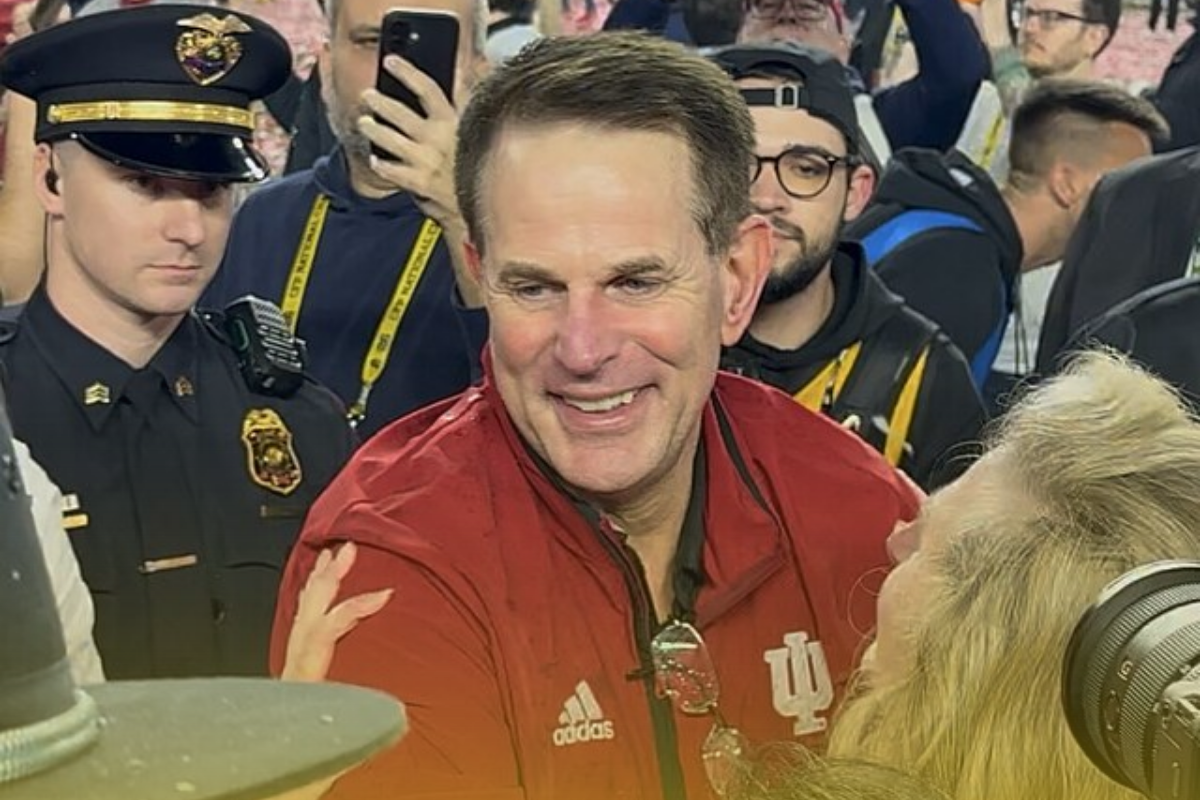
Two years ago, almost no one beyond football insiders had heard of Curt Cignetti. He wasn’t a household name, a blue-blood coach from the Power 5, or an up-and-coming assistant coach from last year’s championship team. Instead, he was quietly winning everywhere he went — at small programs that needed exactly what he built: belief, standards, and consistency.
Before Bloomington came calling, Cignetti had compiled a head coaching record of 145–37 across four programs, including a turnaround at Elon University (14–9 after years of losing), and spectacular success at James Madison University (52–9), where he helped lead the Dukes into the FBS ranks.
Yet when Indiana University, a program long notorious for losing, hired him on Nov. 30, 2023, the reaction was muted. His résumé did not foreshadow victory. His successes were built far from college football’s glamour programs, in places where wins had to be engineered, not inherited.
The Moment That Changed the Narrative
Journalists and pundits continually questioned whether someone without marquee name recognition could sell belief to recruits, alumni, and fans. That’s when Cignetti delivered one of his first viral lines that would punctuate the start to a new chapter and define his brand:
“It’s pretty simple. I win. Google me.”
He wasn’t being braggadocios. He was reframing credibility, precisely the same thing strategic communicators seek when navigating skepticism. In that sentence, he turned doubt into evidence, directing skeptics toward observable proof rather than gut feelings, opinions, and superstition.
But one of the most incredible lines these eyes have ever read has not gotten nearly enough attention. When Indiana University President Pamela Whitten asked Cignetti how he wins everywhere he goes, the coach said: “I wage a tenacious battle against complacency.”
“I wage a tenacious battle against complacency.”
Please, go back and read that again. It makes me weepy because it’s so clear, directional, and intentional. And, of course, we all know what happens from Cignetti’s December 2023 hiring announcement press conference to last Monday’s championship game.
Forget comparisons to Osborne, Saban, and Lombardi. He needs to be held up against Simon Sinek, Brené Brown, and Dale Carnegie.
What He Found When He Arrived
Once on campus, the challenge wasn’t schematic X’s and O’s, it was identity. Multiple reports captured the same theme: Indiana football was burdened by a history of losing, low belief, and the absence of internal standards around winning.
Cignetti told this to 60 Minutes (because the football team got the university on 60 Minutes!):
Coach Curt Cignetti: Right away I detected an atmosphere that, “You can't get it done here.”
Jon Wertheim: You sensed that?
Coach Curt Cignetti: Oh, absolutely. As soon as I walked in the building. Facilities that had been neglected. The stadium banners that looked old. The offices that looked like they were from 1980. And then, you know, just the general attitude of the people I met, the lack of excitement…I was furious, pretty much.
A New Yorker profile described how, in the three seasons before Cignetti arrived, Indiana went 9–27 and “had lost more games than any other major program.” Players and recruits weren’t just untested; they lacked the belief that winning, especially at the highest level, was possible.
This isn’t unusual in organizations that have underperformed over time: the internal narrative becomes its own constraint. Leaders who arrive into these environments face not only operational deficits but existential ones, a lack of collective belief in the mission’s attainability.
Cignetti’s strategy? Diagnose the culture, then treat it like a belief problem.
Top 5 Culture Insights From Cignetti’s Leadership Playbook
Here are the consistent themes from Cignetti’s past interviews, pressers, and leadership reflections distilled into lessons with direct applicability for strategic communicators and culture architects.
1) Belief Is Built, Not Assumed
Cignetti never assumed Indiana would believe they could win. Instead, he prioritized belief as a strategic objective, similar to how a company might reframe its value proposition internally before trying to sell it externally. He has often described culture as a standard that precedes performance, not one that follows it. This mirrors internal comms theory: belief must be spoken into existence before it becomes operationalized.
2) Credibility Comes From Consistent Wins
Cignetti’s résumé — 145–37 across programs — isn’t just statistics. It’s an operational baseline he uses to persuade, articulate vision, and build trust. His “Google me” line redirects narrative dispute into empirical evidence, forcing conversation back onto performance.
For communicators, this is a powerful tactic: let your track record answer questions you shouldn’t have to negotiate.
3) Language Is a Culture Tool
At every stop, Cignetti honed repeatable language that encapsulated expectations. Players internalize phrases like “fast, physical, relentless” and “every play has a life of its own.” These aren’t slogans, they’re binding language systems that shape identity and decision-making.
Internal communications pros use similar constructs (e.g., “One Team, One Mission”) because they act as shared cognitive shortcuts that align behavior.
4) Recruiting Culture Over Talent
Instead of chasing the highest-rated recruits, Cignetti often targets players who believe in the mission and fit the standard. (This is how Cignetti was hired, too.) Many starters were transfers who soaked up a winning ethos and brought it with them. This is equivalent to culture hiring — choosing employees whose mindsets embody the mission over those with mere credentials and quickly separating from staff or leaders who interrupt culture cohesion.
5) Accountability Is Daily, Not Quarterly
Cignetti’s approach to standards is clear. In multiple interviews, he emphasizes daily reinforcement, the walkthroughs, the language, the coaching moments, where culture is lived.
This aligns with what internal communications research calls “embedded narratives,” the stories and interactions that happen day in, day out and ultimately define what matters.
A Culture Turnaround For the Record Books
Cignetti showed us all what is possible with the right culture, yes, even in a hot-and-cold Midwest university location with a losing record and limited NIL:
A Heisman Trophy. AP/Coaches/CFP No. 1 ranking. Big Ten Conference Championship. National Championship. First undefeated 16-0 perfect season in program history.
And Cignetti won, among others, the Paul “Bear” Bryant Coach of the Year honor recognizing leadership, excellence, and impact on and off the field.
For strategic communicators, his story is a reminder that:
Belief must be explicit before performance can follow.
Credibility is anchored in evidence.
Language shapes identity and must be collectively adopted.
Culture hiring beats talent chasing.
Daily behaviors matter more than quarterly speeches and annual reports.
Find the cultural complacency in your work life, and Cignetti-style wage a tenacious battle.