Good Good’s Bad, Bad Decision-Making
A 15-second social media ad has turned into a very expensive lesson in communications decision-making.
Good Good Golf started as a group of friends making golf videos on YouTube and grew into one of the most influential brands in the sport. It has more than 2 million YouTube subscribers, a growing apparel and equipment business, major retail distribution, and partnerships across professional golf. Last year, the company raised $45 million.
Among its most prominent relationships was a partnership with Callaway Golf.
Last week, Good Good posted an ad promoting its new driver with Callaway. In the video, co-founder Garrett Clark sees a woman reaching for the club, runs toward her, knocks her to the ground, stands over her, and tells her not to touch his new driver.
It was apparently supposed to be funny.
Come on, what? Violence isn't funny. Some creative decisions require careful judgment about where the line is. This certainly wasn't one of them.
The starting point for any brand should be basic decency, respect, and dignity. Somewhere in this process, getting attention and selling a golf club became more important than those fundamentals.
The video was quickly removed, but the consequences kept coming.
Good Good apologized. Callaway initially expressed disappointment. Dick's Sporting Goods, Golf Galaxy, PGA Tour Superstore, and Target pulled Good Good merchandise. A planned Golf Channel program was dropped. Good Good stepped away from its title sponsorship of a PGA Tour event.
Then Callaway CEO Chip Brewer issued a second, much stronger statement. And he revealed perhaps the most important detail in this story: Callaway had approved the ad. (Yikes.)
Brewer said the approval "should never have happened," announced reviews of the company's processes, and eventually terminated Callaway's relationship with Good Good. Callaway also committed $1 million to organizations working to prevent violence against women and support survivors.
Good Good has since said the people responsible for the campaign were dismissed and that it is strengthening its own review processes.
All of which raises the strategic communications question I find most interesting: How did no one stop this?
Someone came up with the idea, approved the concept, agreed to perform it, filmed it, edited it, and reviewed it. Someone at Callaway reviewed and approved it. (OMG) And then it was published.
This was an up-and-down, side-to-side systemic decision-making failure.
And I have to wonder: Was there really no one along the way who said, “Guys, I’m not sure about this”? Or did someone say it and get told to relax, stop overthinking it? Either answer tells us something about the cultures that allowed this ad to happen.
There are plenty of communications decisions that live in gray areas. Is something too edgy? Is the joke funny or offensive? Could a message be interpreted differently than intended? Does a creative idea fit the brand?
Those are exactly the situations where organizations need clear review processes and criteria aligned to your vision, mission, and values.
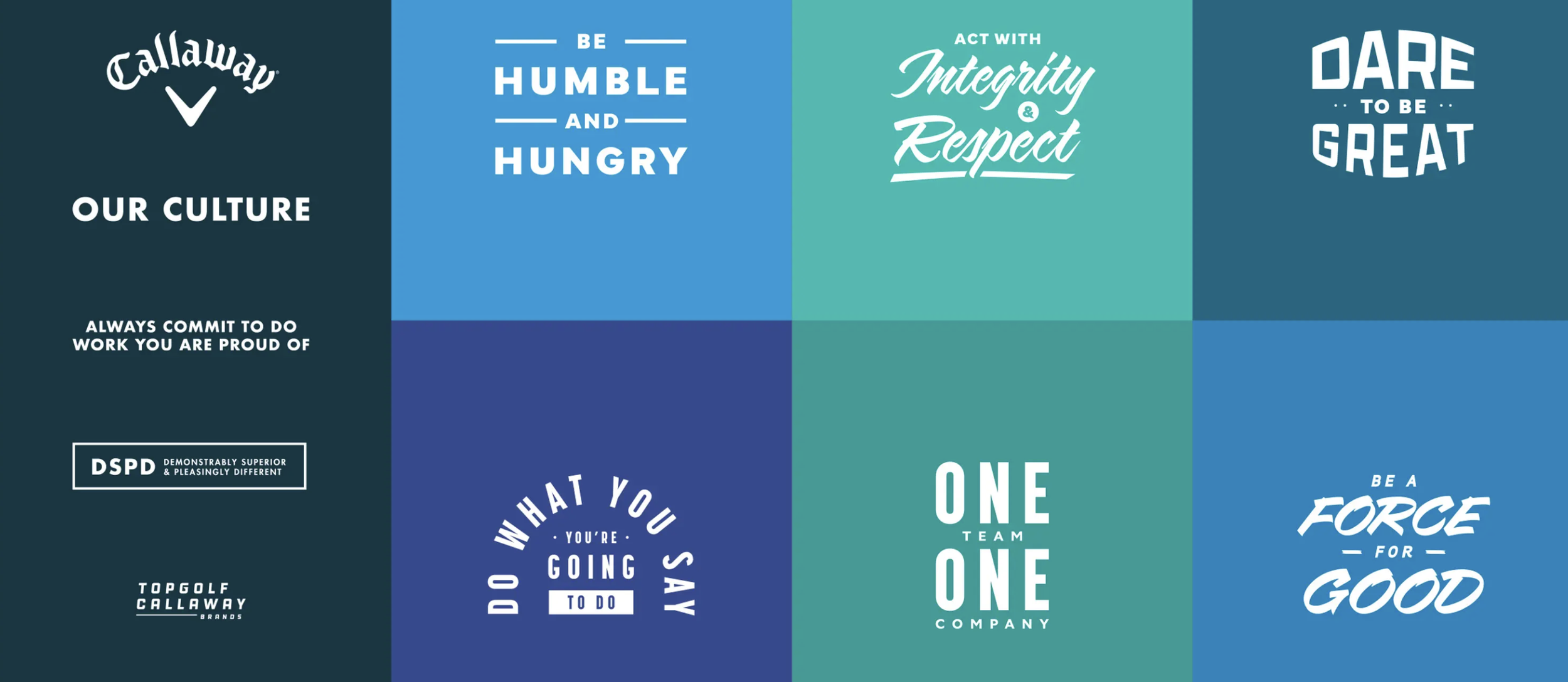
One of Callaway’s six core values is “Be a Force for Good.”
Good Good does not have publicly stated mission or values on their website but in articles, said, interestingly, “Good Good has always stood for making the game of golf more inclusive to all.”
Review processes matter: Who needs to see this before it goes out? Who is responsible for considering reputational risk? Have people with different perspectives weighed in? Has someone looked at the content from the audience's point of view rather than the creator's? And, perhaps most importantly, does everyone involved have permission to say, "We shouldn't do this"?
A good communications review process isn't simply about creating more layers of approval. It is about creating a culture in which people exercise judgment. That's what makes this case so useful.
The more provocative an idea is, the more scrutiny it should receive, not less. Someone needs to be responsible for asking how an idea could land outside the room. And people at every level need permission to stop something that doesn't feel right.
There is another lesson here for organizations working with partners and outside brands.
Good Good produced the ad. But Callaway's name was on the product. Callaway approved the ad and reposted it. To many people watching, the distinction between the two companies probably didn't matter.
You can outsource content creation. You cannot outsource reputational responsibility. And there may be an even broader lesson in Good Good's bad ad story.
The company grew from a group of friends creating YouTube videos into a sophisticated business with major investors, national retailers, corporate partners, television opportunities, and relationships with professional golf.
Organizations can grow faster than their communications infrastructure.
The informal decision-making that works when a few people are creating content together may not work when millions of dollars, employees, business partners, and multiple reputations are attached to every decision.
Growth requires more than bigger audiences and bigger partnerships. It requires more mature systems and, most importantly, a defined culture that expects and rewards good judgment and mentors or removes those without it.
Many communications mistakes are complicated. This one wasn't. And maybe that's exactly why it's worth paying attention to.